Springs · The Junction
Garage Door Cable Replacement in The Junction
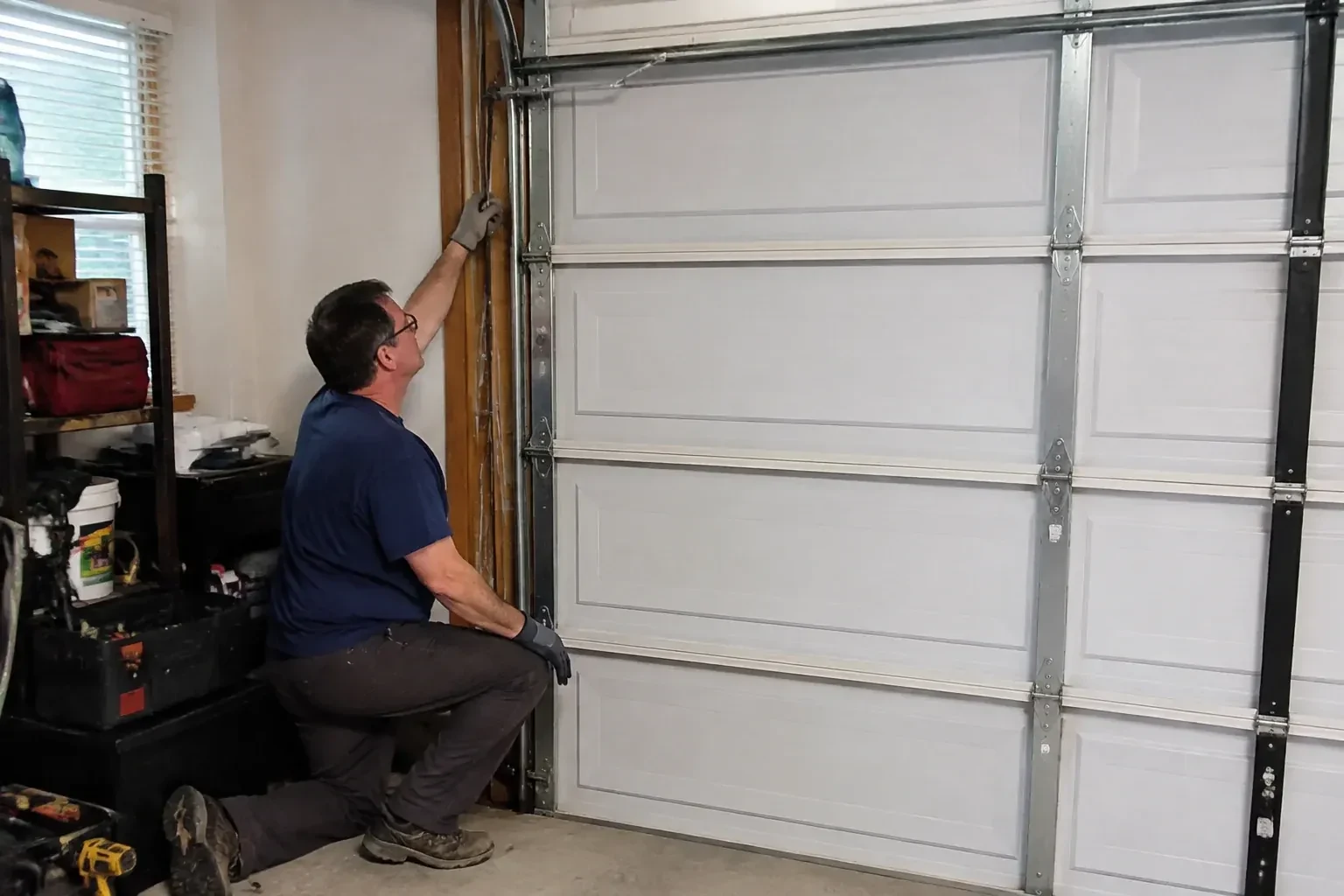
The cable has wrapped itself around the shaft above the door instead of sitting on its drum. When the opener runs, the door lurches, one side rises before the other, and the top panel twists.
Garage Door Cable Replacement
In plain words
Garage door cables carry the weight of the door as tension held by the springs, which is why the work follows a careful, well-rehearsed sequence rather than simply hooking a cable back on. On a torsion system the technician clamps the door, disconnects the opener and unloads the springs with winding bars before any cable, drum or bracket is touched; on an extension system the door is instead raised fully and clamped so its pulley-mounted springs relax. Once the system is unloaded, replacing the cables is straightforward: the correct length is set, and the counterbalance is tensioned and locked off by the method that system calls for.
How the visit goesThe cable has wrapped itself around the shaft above the door instead of sitting on its drum. When the opener runs, the door lurches, one side rises before the other, and the top panel twists.
The Junction
How the visit goes
The drums and their set screws
On a torsion door the cable drum is where most trouble starts or shows. The technician checks that each drum is tight on the shaft and that its set screws have not loosened and let it creep, which shortens the effective cable on that side. The groove is inspected for wear ridges, cracks and burrs that would chew through a new cable, and the slot that holds the cable stop is checked for damage. Where the old cable jumped its groove, the drum is examined for the mark it left and for whether the drum or an obstruction under the door was the cause. A worn drum is replaced with its mate.
Removing the old cables
Each drum's set screws are backed off so the drum spins freely on the shaft, and the old cable is unwound from its groove and the stop slipped out of its slot. At the floor, the loop is lifted off the bottom bracket pin, or the clevis pin and cotter pin are withdrawn where the door uses them. The old cable is kept for a moment to measure against its replacement and to show you the wear that caused the call. On an extension door the cable comes off its pulleys and the adjusting clip at the track hanger. Both sides are stripped before anything new goes on.
Lubrication that helps, and where it does not belong
A few minutes with a can of garage-door lubricant twice a year keeps the whole system easy on the new cables. Spray the torsion spring lightly along its length, the hinge pins, the roller stems and bearings, and the bottom bracket pins, then run the door a few times to spread it. A light mist on the cables themselves slows rust; heavy grease is avoided because it holds grit and moisture. The tracks are left dry and simply wiped clean, since lubricant there collects dirt and lets rollers slide instead of roll. Silicone or a lithium spray made for doors is the right product.
Garage Door Cable Replacement
In the van
- Bottom brackets with cable pin
- Silicone garage-door lubricant
- Cable drums, matched pair
- Galvanized aircraft-type lift cables
- Extension-spring pulleys and sheave forks
What affects the quote
Same fees day, night or weekend
1Impact damage to track or sections
A bumper strike often bends the track, a hinge or the bottom section as well as displacing the cable. Straightening or replacing those parts is quoted as separate work.
2How the door is sitting
A door resting closed is simpler than one wedged crooked in the opening or off its track, which has to be supported and straightened before the cables can be handled.
3Door weight and width
A heavy insulated double door needs a heavier cable and sometimes different drums than a light single, and the springs behind it take longer to wind down and back up.
Garage Door Cable Replacement: questions
Is cable work different on a door with extension springs?
The idea is the same and the route is different. Instead of winding onto a drum, the cable runs from the bottom bracket up over a pulley at the front of the track, back over a pulley on the spring, and to an adjusting clip. The technician relaxes the springs by opening and clamping the door, replaces worn pulleys along with the cable, sets both clips the same, and confirms a containment cable runs through each spring.
Why should the bottom brackets never be loosened by hand?
The bottom bracket is where the cable attaches, so whenever the springs are wound it carries a share of the door's weight as tension. Loosening it while the counterbalance is loaded releases that tension all at once. Many manufacturers now fit tamper-resistant fasteners for this reason. The technician unloads the springs first, after which the bracket is just a piece of hardware to unbolt and replace.
Why is the door sitting crooked in the opening?
Each corner of the door is held by its own cable. When one cable stretches, slips its drum or breaks, that corner loses its lift and drops while the other stays up, so the door tips and usually wedges against the track. Setting both cables to the same length and tension is part of every cable replacement, and it is what brings the door back level.
Springs & Hardware
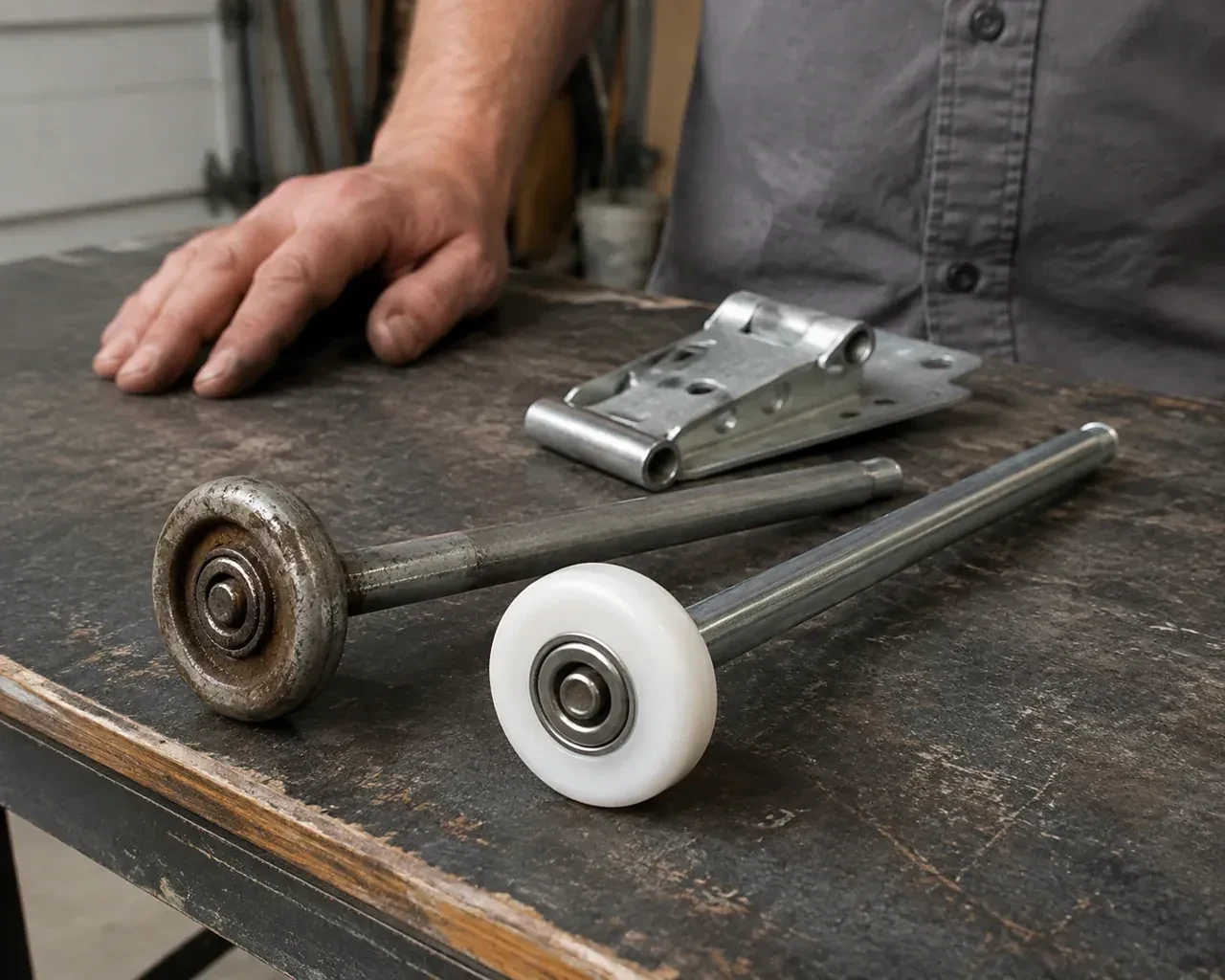
- Garage Door Hinge ReplacementPressing a hand against one of the middle hinges makes it rock on the panel.
- Garage Door Track Repair or ReplacementYou bought the house with a door that sticks near the top of its travel.
- Torsion Spring ReplacementAfter pulling the red release cord, you tried lifting the door yourself and it would barely leave…
Garage Door Cable Replacement near you
Shops, warehouses and service bays in The Junction have their own list: rolling steel doors, heavy sectional doors, industrial operators, safety edges and high-cycle springs. Alongside our residential work, we service and replace all of these and can set up a maintenance schedule that fits your operating hours.