Repairs · Toronto
Garage Door Bottom Seal Replacement
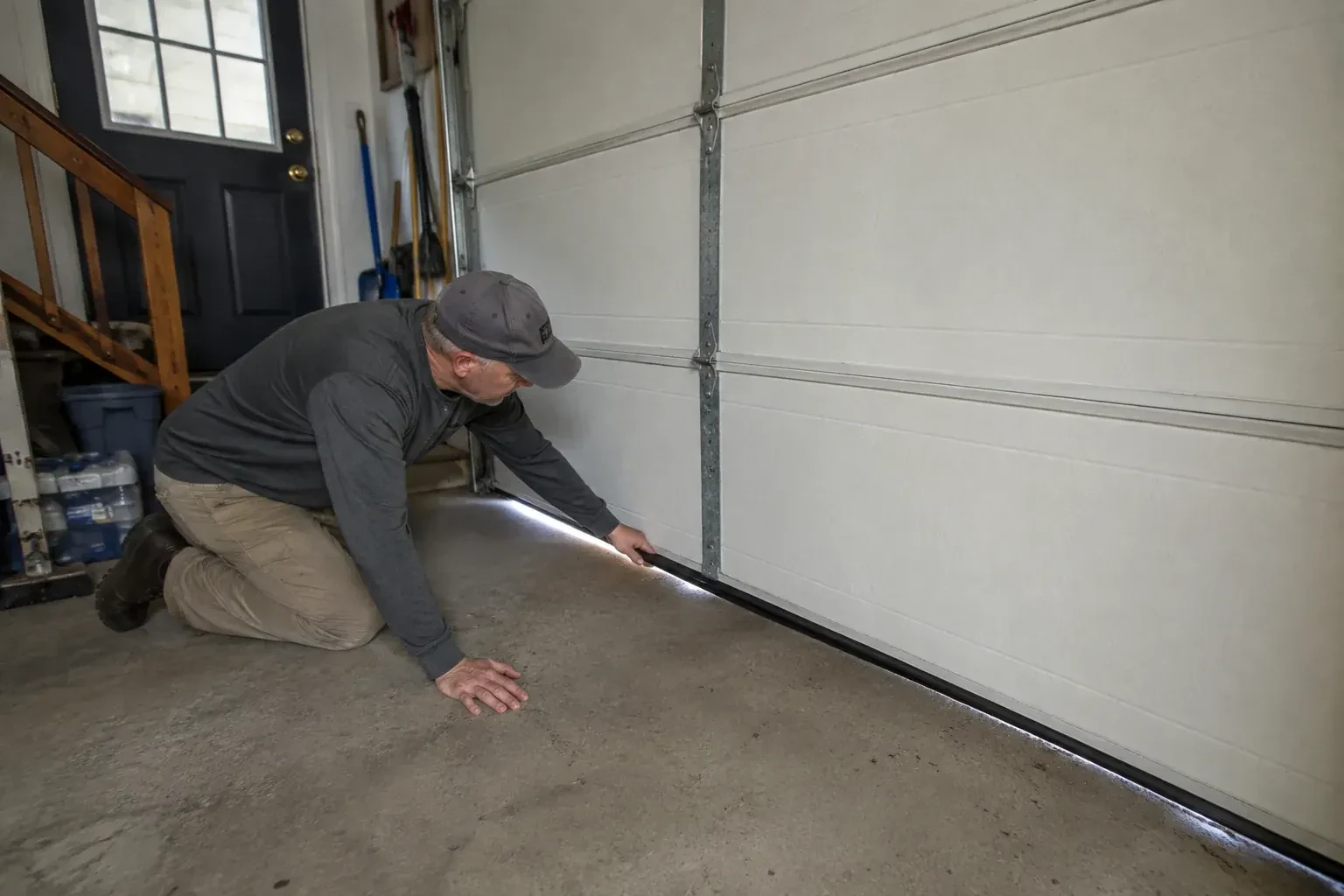
The garage doubles as a workshop, and with the heater running the floor near the door stays cold and the draft finds your ankles at the bench. When the wind is up you can feel the air moving under the door.
Garage Door Bottom Seal Replacement
In plain words
The bottom seal is one part of a weather line that runs all the way round the door. Vinyl-finned stop moulding seals the jambs and header, the section joints have their own tongue-and-groove or shiplap seals, and a threshold seal glued to the floor can meet the bottom strip where a slab slopes the wrong way. Bottom seal replacement addresses the piece that takes the most punishment, and while the technician is there the rest of the perimeter is looked over. Where the side or top strips are torn or shrunk, doing them in the same visit gives a garage sealed on all four edges rather than three.
How the visit goesThe gap under the door is a finger wide at one end and nothing at the other. The door itself looks straight, but the floor drops away toward the corner where the slab has settled, and drafts pour through the wedge.
Toronto
How the visit goes
Why the old seal failed
The old strip is read for its history before it comes off. Cracks along the fold and a chalky surface point to sun and age. A flattened bulb that no longer springs back is compression set. A torn edge at one end usually means the seal froze to the floor and the opener pulled it free. Chew marks say rodents. A strip that has slid partly out of its channel points to a bent or opened retainer, or to a seal that was slightly the wrong size. Each of these leads to a different choice of material, profile or retainer work, so the new seal is spared the fate of the old one.
Taking the old seal out
With the door secured, the ends of the old strip are freed from any caps or folds and the seal is drawn out of its channels from one end. A supple seal slides; a hardened one is coaxed with a flat blade and a little silicone, or cut into short lengths and removed a piece at a time. Old nails come out of a wood rail with a claw. The channels are then cleaned of grit, rust flakes, salt crust and any remnants of the previous strip with a wire brush and a scraper, because a clean channel is what lets the new seal feed through without tearing.
A clear threshold through winter
The seal closes onto whatever is on the floor, so the threshold deserves a moment when you clear the driveway. Push packed snow and the ridge of ice that forms where the door meets the slab away from the opening before running the door, and sweep salt piles and grit clear of the line so they are not ground into the strip. Park a little further in, if the garage allows, so drips from the car fall on the floor rather than at the seal. These are the same habits that protect the bottom brackets and cables in the corners.
Garage Door Bottom Seal Replacement
In the van
- Seal end caps
- Silicone spray lubricant
- Wire brush and scraper
- Aluminum bottom seal retainer
- Bead-style bottom seal
What affects the quote
Same fees day, night or weekend
1Rodent-resistant seal
A profile with embedded stainless mesh for a garage that has had repeated chewing costs more per length than plain vinyl and is offered where the history calls for it.
2Season and conditions
A seal frozen to the slab, ice at the threshold or working in deep cold adds time for freeing the old strip, clearing the line and keeping the new roll warm enough to feed.
3Seal profile and size
T-style, bead and bulb profiles in different widths and heights sit at different points on the parts list, and the retainer on your door decides which one is used.
Garage Door Bottom Seal Replacement: questions
How can I tell that the bottom seal needs replacing?
Close the door, turn off the lights and look along the floor from inside. Daylight showing, a strip that feels hard or cracks when pressed, a bulb that has flattened and stays flat, an end hanging out of its channel, chew marks or missing pieces are all signs. So are leaves, snow or a puddle inside the door after weather. Any one of these means the seal has stopped doing its job.
What information helps when I book?
The width of the door and whether it is a single or double; what is getting in, whether light, drafts, water, snow or pests, and where along the door; whether the gap is even or worse at one end; the door material; and a photo of the end of the bottom section showing the retainer and seal. Mention if the seal has frozen to the floor or if the door has been reversing before it closes.
Is this something I can do myself?
Many homeowners do, and a technician's value lies in the parts that go wrong: identifying the exact profile so the seal seats, freeing a strip that has fused into its channel, spotting a retainer or door-level problem behind the gap, and resetting the opener's limit and force so the door lands gently and still reverses on an obstruction. If you would rather have it measured, fitted and tested in one go, that is what the visit is for.
Repair & Maintenance
- Garage Door Tune-UpOn windy nights the door rattles in its frame, there is a line of daylight along one side, and the…
- Off-Track Garage Door ResetThere was a loud bang from the garage, then silence.
- Garage Door Panel ReplacementYou misjudged the last metre of the driveway and felt the bumper meet the door.
Garage Door Bottom Seal Replacement near you
Residential and commercial customers in Toronto come to us for spring and cable replacement, off-track resets, opener diagnosis and replacement, remote and keypad programming, weatherstrip and seal work, balance adjustments, panel repair and new door installation. Each service is explained on its own page in plain language.