Repairs · Toronto
Garage Door Safety Inspection
A tenant mentioned the door is louder than it used to be. From the driveway it looks fine, but on closer inspection the hinges near the floor are streaked orange and one roller wobbles as it turns.
Garage Door Safety Inspection
In plain words
A garage door safety inspection is a systematic look at everything that moves the door and everything meant to stop it. The technician identifies the door and opener from their labels, then examines the sections, hinges, rollers, tracks, springs, cables, drums, brackets and seals, watches a full cycle, tests the door's balance by hand, and runs the reversal and photo-eye tests the opener manual calls for. Nothing tensioned is adjusted during the inspection. What you receive is a dated record of the door's condition, with anything that needs attention sorted by how soon it matters.
How the visit goesA tenant mentioned the door is louder than it used to be. From the driveway it looks fine, but on closer inspection the hinges near the floor are streaked orange and one roller wobbles as it turns.
Toronto
How the visit goes
Putting a name to the door and the opener
The first thing the technician does is read labels. The door's model tag is usually on the inside of an end stile or the bottom section, and the opener's is on the motor head; between them they tell the technician the door's weight class, the lift hardware it was built with and the exact test procedure the opener maker publishes. That matters because reversal settings, photo-eye mounting heights and force limits differ between models and generations. Writing the model numbers down at the start also means the report is tied to a specific door, so the next person to look at it, years from now, starts from the same page.
Fasteners, tracks and hinges with tools in hand
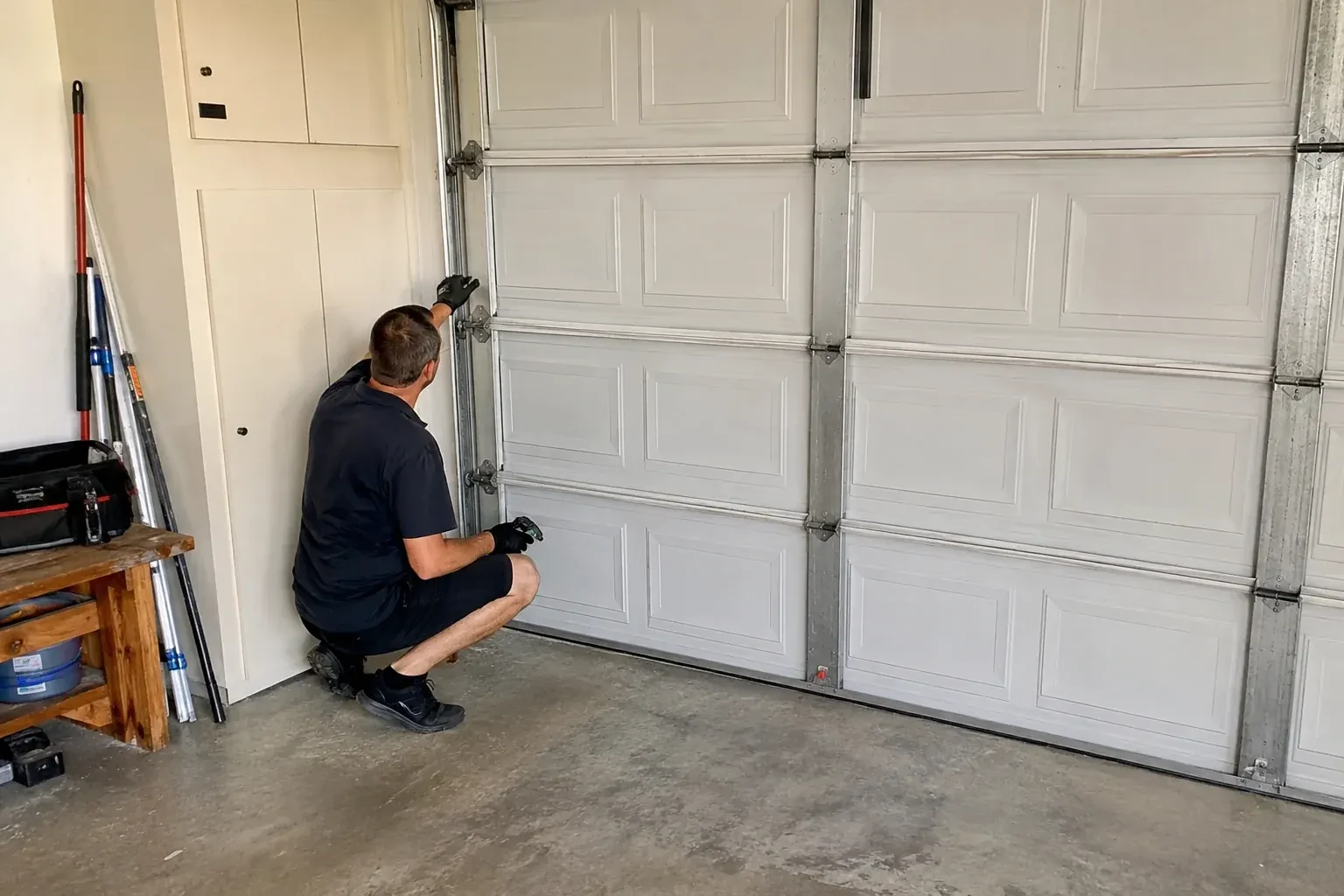
Once the door has been tested, the technician goes back along it with a socket set and a level. Every hinge bolt and track bracket is checked for tightness, and any that has backed out is snugged; the bottom roller brackets are left to the trained, system-specific handling their lift-cable tension calls for, not a routine snug. The vertical tracks are checked for plumb and the horizontals for level, with the door-to-track gap measured and any pinch or flare recorded. Hinges are numbered from the bottom up and a hinge in the wrong position, often left from an earlier repair, is noted. A stripped fastener or a bent bracket becomes a repair item rather than a tightening.
Knowing what normal sounds like
Once the door has been checked and any maintenance done, take a moment to listen to it run a couple of times. That even, unremarkable sound from the floor to the top of travel is the baseline. From now on a new knock, a squeal at one height, a motor that labours for a second at the start, or a door that lands with a thud instead of settling is a change from that baseline, and a change is easier to describe on the phone than a vague sense that something is off. Many owners find that after one inspection they hear their door differently, and that awareness is worth as much as the report.
Garage Door Safety Inspection
In the van
- Inspection checklist and report form
- Tape measure and level
- Weatherstrip samples for matching
- Flat 2x4 test board
- Spring and cable gauges
What affects the quote
Same fees day, night or weekend
1Scheduling for a building or complex
A row of townhouse garages or a set of rental units is planned as one block of time with a record per door, and the quote is set by the count of doors and openers.
2Maintenance done during the visit
Lubrication, photo-eye cleaning and alignment, fastener tightening and fresh batteries can be added on the spot. Each is a small line on the quote, chosen by you at the door.
3A retest after repairs
When the report lists repairs, a short return visit to rerun the balance, reversal and photo-eye tests once the work is done is quoted as its own item.
Garage Door Safety Inspection: questions
How should I prepare for the appointment?
Move the car out if you can and clear a metre or so in front of the door and along both tracks so the technician can reach the hinges and brackets. Find the door and opener manuals and any earlier repair paperwork. Have every remote and the keypad code to hand. If something has changed lately, be ready to say when and what you noticed first. If the door looks wrong, leave it where it is.
Is the inspection different for an older detached garage with springs along the tracks?
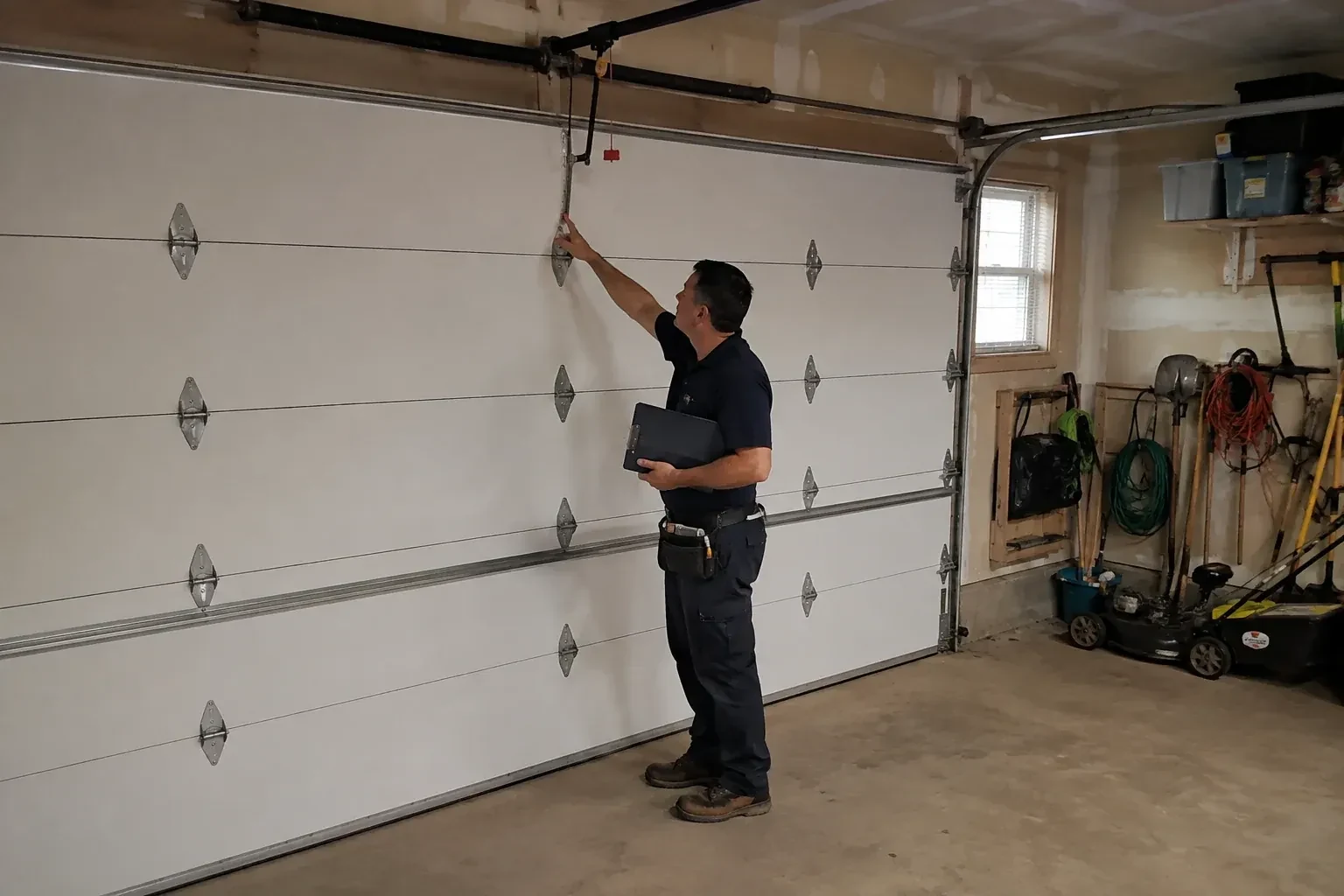
The route is the same and the counterbalance looks different. Extension springs stretch beside the horizontal tracks and pull through pulleys, so the technician examines each spring for stretch and a broken end, each pulley for a grooved wheel or a seized bearing, the cable clips, and whether a containment cable runs through the centre of each spring. Balance, reversal and photo-eye tests are unchanged.
Does winter change what you look for?
Yes, mostly at floor level. Months of slush and road salt reach the lowest hinges, the bottom brackets and the loop of each cable before anything else on the door, so those get a close look for rust. The technician also checks whether the bottom seal has been freezing to the slab, how the drive has coped with cold, stiff starts, and whether frost or salt film has been blinding the sensors near the floor.
Repair & Maintenance
- Off-Track Garage Door ResetThere was a loud bang from the garage, then silence.
- Garage Door Panel ReplacementYou misjudged the last metre of the driveway and felt the bumper meet the door.
- Garage Door Bottom Seal ReplacementThe garage doubles as a workshop, and with the heater running the floor near the door stays cold…
Garage Door Safety Inspection near you
Residential and commercial customers in Toronto come to us for spring and cable replacement, off-track resets, opener diagnosis and replacement, remote and keypad programming, weatherstrip and seal work, balance adjustments, panel repair and new door installation. Each service is explained on its own page in plain language.